

Disadvantages of a Tankless Water Heater
January 7, 2026
Go back to "Blog"
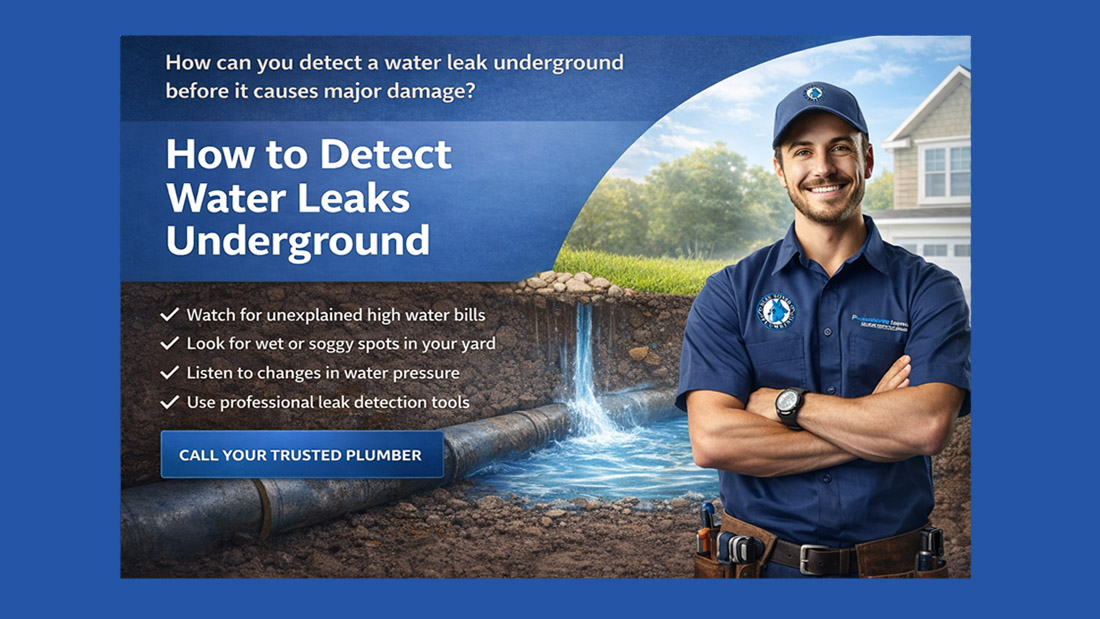
Underground water leaks can cause serious damage long before they become visible. Because the pipes are buried beneath soil, concrete, or pavement, leaks often go unnoticed until water bills rise or structural problems appear.
This leads many property owners to ask: How can you detect a water leak underground before it causes major damage?
This article explains the warning signs of underground water leaks, simple checks you can perform, and professional methods used to locate leaks accurately and efficiently.
1. What is an underground water leak?
An underground water leak occurs when a buried water supply line, irrigation pipe, or service main develops a crack, joint failure, or break below the surface.
Because the leak is hidden, water often disperses into surrounding soil instead of surfacing immediately.
This makes underground leaks harder to detect than exposed plumbing failures.
2. Why underground water leaks are difficult to find
Underground leaks rarely create obvious puddles or dripping sounds. Water may travel through soil or along pipe trenches before appearing elsewhere.
In many cases, the visible damage occurs far from the actual leak location.
As a result, early warning signs are often subtle and easy to overlook.
3. Unexplained increases in water bills
One of the most common indicators of an underground water leak is a sudden or unexplained increase in your water bill.
If water usage habits have not changed but costs continue to rise, a hidden leak may be allowing water to flow continuously.
Monitoring monthly usage can help catch leaks early.
4. Changes in your yard or landscape
Underground leaks often affect soil conditions above the pipe.
Persistent wet spots, soggy ground, erosion, or unusually green patches of grass can signal leaking water below the surface.
These symptoms are especially common near water supply lines or irrigation systems.
5. Low water pressure or system performance
A significant underground leak can reduce water pressure throughout the home or property.
If multiple fixtures experience weaker pressure at the same time, the issue may lie in the main underground supply line.
Pressure loss often worsens as the leak grows.
6. Using your water meter to check for leaks
A simple way to confirm a hidden leak is by checking your water meter.
Turn off all water inside and outside the property, then monitor the meter for movement over 30 to 60 minutes.
If the meter continues to change, water is leaking somewhere on the property.
7. Professional underground leak detection methods
When a leak is confirmed but not visible, professionals use specialized equipment to locate it precisely.
Common techniques include acoustic listening devices, pressure testing, thermal imaging, and tracer gas detection.
These methods reduce the need for unnecessary digging and speed up repairs.
8. Why early detection is important
Undetected underground leaks can lead to soil erosion, foundation damage, mold growth, and costly structural repairs.
Over time, even a small leak can weaken pipes and surrounding materials.
Early detection helps minimize damage and reduce overall repair costs.
9. When to contact a professional plumber
If your water meter confirms a leak or you notice ongoing wet areas, pressure loss, or foundation concerns, professional assistance is recommended.
Licensed plumbers have the tools and experience to locate underground leaks accurately.
Prompt action prevents minor issues from becoming major repairs.
Final thoughts
Detecting water leaks underground requires awareness of subtle warning signs and timely investigation.
By monitoring water usage, inspecting property conditions, and seeking professional help when needed, property owners can protect their plumbing systems and avoid unnecessary damage.