

How to Use Riser Clamps in Plumbing
March 16, 2026
Go back to "Blog"
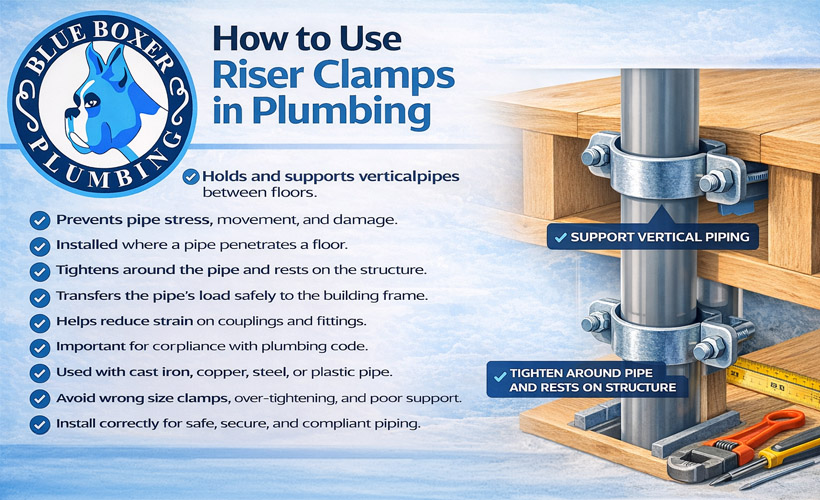
Riser clamps are an important part of plumbing systems that use vertical piping. They are designed to support the weight of pipes as they run between floors, helping prevent movement, strain, and damage over time.
If you are asking how to use riser clamps in plumbing, the short explanation is that they are installed around a vertical pipe and anchored at a floor level or structural support point so the pipe’s weight is carried properly. This helps protect the system and keeps the piping stable.
In this article, Blue Boxer Plumbing explains what riser clamps do, where they are used, and how they should be installed.
1. What is a riser clamp in plumbing?
A riser clamp is a pipe support fitting used on vertical pipes, also called risers. Its job is to hold the pipe in place and transfer its weight to the building structure instead of letting the full load rest on fittings or lower pipe sections.
Riser clamps are commonly made of metal and are sized to match the outside diameter of the pipe they support. They usually wrap around the pipe and rest against a structural opening or support member.
2. What are riser clamps used for?
Riser clamps are used to support vertical plumbing lines in residential, commercial, and multi-story buildings.
- Support the weight of vertical piping
- Reduce stress on joints and fittings
- Keep pipes aligned as they pass through floors
- Limit movement and shifting over time
- Help maintain a safer and more secure installation
Without proper support, a vertical pipe can place too much downward force on fittings, which may lead to leaks, separation, or long-term damage.
3. Where are riser clamps installed?
Riser clamps are typically installed at or near the point where a vertical pipe passes through a floor. The clamp supports the pipe by resting on the floor structure or a framing element designed to carry the load.
Common installation locations include:
- Between floors in multi-story buildings
- At floor penetrations for water supply lines
- On vertical drain, waste, and vent stacks
- In mechanical rooms or utility chases
- Where long vertical piping runs need intermediate support
The exact placement depends on the pipe material, pipe size, building structure, and local code requirements.
4. How do you use a riser clamp in plumbing?
To use a riser clamp properly, it must be installed around the vertical pipe and positioned so the clamp can carry the pipe’s load at the support point.
Here is the general process:
- Select a clamp that matches the pipe size and material
- Place the clamp around the vertical pipe
- Tighten the clamp securely so it grips the pipe properly
- Position it at the floor penetration or designated support point
- Make sure the clamp rests evenly on the structure or support surface
- Confirm the pipe is plumb and properly aligned before final tightening
The purpose is not to squeeze or damage the pipe, but to support it firmly so the pipe’s weight is transferred safely to the building structure.
5. Why are riser clamps important?
Riser clamps play a major role in the long-term reliability of a plumbing system. Vertical pipes can become very heavy, especially in taller buildings or when using metal piping. Without proper support, that weight can create stress at couplings, fittings, and connections.
Benefits of riser clamps include:
- Better load distribution
- Less stress on lower pipe sections
- Reduced risk of leaks from movement
- Improved pipe stability
- Cleaner, more professional installation
They are one of those components that may seem minor, but they are critical to a secure plumbing system.
6. Can riser clamps be used on all plumbing pipes?
Riser clamps can be used on many types of vertical plumbing pipes, but the correct clamp must be chosen for the application. Pipe material, diameter, weight, and intended use all matter.
They may be used with:
- Cast iron pipe
- Copper pipe
- Steel pipe
- PVC or other approved plastic piping, when compatible supports are used
Not every pipe should use the same style of clamp. Using the wrong size or type can lead to poor support or damage, so matching the clamp to the piping system is important.
7. Do riser clamps need to follow plumbing code?
Yes. Pipe support requirements are typically governed by plumbing code and may also be influenced by manufacturer instructions and engineering standards. Factors such as spacing, load capacity, pipe type, and installation method can all affect compliance.
That means riser clamps should not be treated as a guesswork item. In many cases, proper support placement is required for inspection approval and long-term system performance.
8. Common mistakes when using riser clamps
Improper installation can reduce the effectiveness of the clamp or create stress on the pipe.
- Using the wrong clamp size
- Installing the clamp at the wrong elevation
- Failing to support the load against structure properly
- Over-tightening and damaging the pipe
- Relying on fittings instead of proper supports
- Ignoring code requirements for vertical support spacing
These mistakes can lead to pipe movement, sagging, noise, or eventual connection problems.
9. Should you install riser clamps yourself?
In simple situations, the concept of a riser clamp is straightforward, but correct installation still matters. Because riser clamps affect structural support and plumbing reliability, they should be installed carefully and according to code.
For new construction, remodeling, or repairs involving vertical pipe runs, it is usually best to have a licensed plumber determine the right clamp type, placement, and support method.
10. Get help with plumbing pipe support
If you need help understanding how to use riser clamps in plumbing, Blue Boxer Plumbing can help. Proper pipe support is an important part of a safe and lasting plumbing system, especially when vertical piping runs through multiple levels of a home or building.
Whether you are planning a plumbing installation, replacing piping, or dealing with support issues, our team can make sure the system is installed correctly and built to last. Contact Blue Boxer Plumbing for professional plumbing service and expert guidance.