

Can hydro jetting damage pipes?
May 26, 2026
Go back to "Blog"
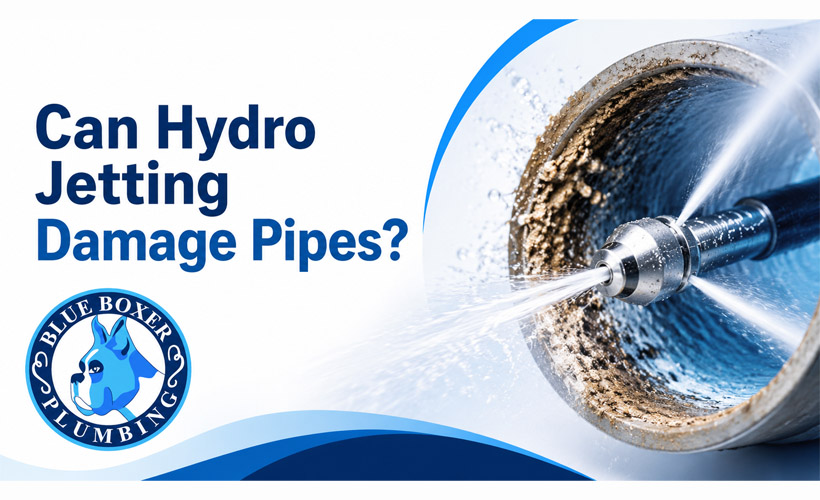
Hydro jetting is one of the most effective ways to clear stubborn drain and sewer line clogs. It uses highly pressurized water to break apart grease, sludge, tree roots, mineral buildup, and other debris inside your pipes.
If you are asking can hydro jetting damage pipes, the short answer is that hydro jetting is safe for many plumbing systems when it is done by a trained professional. However, if the pipes are already cracked, weak, corroded, or damaged, hydro jetting can make those existing problems worse.
In this article, Blue Boxer Plumbing explains when hydro jetting is safe, when it may not be recommended, and why a professional inspection matters before using high-pressure drain cleaning.
1. What is hydro jetting?
Hydro jetting is a professional drain cleaning method that uses a high-pressure stream of water to clean the inside of pipes. A specialized hose and nozzle are inserted into the drain or sewer line, then water is pushed through the pipe to remove buildup and blockages.
Unlike a drain snake, which usually breaks through a clog, hydro jetting can clean the pipe walls more thoroughly. This makes it useful for removing grease, sludge, soap scum, tree roots, and other debris that can collect inside plumbing lines over time.
2. Can hydro jetting damage pipes?
Hydro jetting can damage pipes if the pipes are already in poor condition or if the equipment is used incorrectly. The water pressure must be matched to the pipe material, pipe size, age of the plumbing system, and severity of the clog.
For example, older clay pipes, severely corroded cast iron pipes, cracked sewer lines, or weakened pipe joints may not be able to handle high-pressure cleaning. In those cases, hydro jetting may worsen existing damage or reveal a problem that was already there.
That does not mean hydro jetting is unsafe by default. It means the plumbing system should be inspected first so the plumber can determine whether hydro jetting is the right solution.
3. When is hydro jetting safe?
Hydro jetting is generally safe when the pipes are structurally sound and the service is performed by an experienced plumbing professional.
- The pipes are not cracked or collapsed
- The pipe material can handle the pressure
- The plumber inspects the line before cleaning
- The correct water pressure is used
- The proper nozzle is selected for the blockage
- The clog is suitable for hydro jetting
Modern PVC pipes and many newer sewer lines can often handle hydro jetting without an issue. The key is making sure the condition of the pipe is checked before the work begins.
4. When can hydro jetting be risky?
Hydro jetting may not be recommended if the plumbing system has serious structural issues. In some cases, the pipe may need to be repaired or replaced before high-pressure cleaning is used.
Hydro jetting can be risky for pipes with:
- Severe corrosion
- Existing cracks or fractures
- Collapsed or partially collapsed sections
- Loose or offset pipe joints
- Old clay piping in poor condition
- Fragile cast iron piping
- Pipe bellies or sagging areas that hold standing water
If the pipe is already failing, hydro jetting may not be the real solution. A professional plumber can inspect the line and recommend the safest next step.
5. Why is a camera inspection important before hydro jetting?
A sewer camera inspection is one of the best ways to determine whether hydro jetting is safe for your pipes. During the inspection, a small camera is sent through the line so the plumber can see the inside of the pipe before using high-pressure water.
A camera inspection can help identify:
- Cracked pipes
- Tree root intrusion
- Collapsed pipe sections
- Heavy buildup
- Offset joints
- Pipe corrosion
- The location and type of blockage
This step helps the plumber decide whether hydro jetting is safe or whether another repair method is needed first.
6. Hydro jetting vs. snaking
Hydro jetting and drain snaking are both used to clear clogs, but they work differently.
A drain snake is usually used to break through a blockage. It can open the line and restore flow, but it may leave grease, sludge, or debris behind on the pipe walls. Because of this, the same clog may come back later.
Hydro jetting provides a deeper clean because it washes buildup from the inside of the pipe. This makes it a strong option for recurring clogs, grease buildup, sewer line debris, and more serious blockages.
However, snaking may be the better option for fragile pipes or simple clogs. The right choice depends on the condition of the plumbing system and the type of blockage.
7. Signs you may need hydro jetting
Hydro jetting may be recommended when a clog keeps coming back or when there is heavy buildup inside the drain or sewer line.
- Multiple drains are slow at the same time
- Toilets are bubbling or backing up
- Water backs up into sinks, tubs, or floor drains
- You have frequent drain clogs
- There is a sewer smell in the home
- Your main sewer line has repeated problems
- Kitchen drains are affected by grease buildup
These signs can point to a deeper issue in the plumbing system. A professional inspection can confirm whether hydro jetting is the right service.
8. Can hydro jetting remove tree roots?
Hydro jetting can help cut through and remove some tree roots from a sewer line, depending on the severity of the root intrusion. The high-pressure water can break apart roots and flush debris out of the pipe.
However, if roots have entered the pipe, there is usually an opening, crack, or joint issue that allowed them in. Hydro jetting may clear the line, but it may not permanently fix the reason roots are getting inside.
If tree roots are a recurring problem, the pipe may need repair or replacement to prevent future backups.
9. Is hydro jetting worth it?
Hydro jetting can be worth it when the pipes are in good condition and the blockage is suitable for high-pressure cleaning. It can provide a more complete cleaning than standard snaking and may help reduce recurring drain problems.
Benefits of hydro jetting include:
- Thorough pipe cleaning
- Removal of grease and sludge buildup
- Improved drain flow
- Help with recurring clogs
- Cleaning for main sewer lines
- Less leftover debris inside the pipe
The most important factor is making sure the service is done correctly. Hydro jetting should be handled by a plumber who understands how to inspect the line and adjust the equipment properly.
10. Call Blue Boxer Plumbing for professional hydro jetting
If you are dealing with slow drains, recurring clogs, or a sewer line backup, Blue Boxer Plumbing can help determine the safest and most effective solution. Hydro jetting is powerful, but when it is used properly, it can be a safe and effective way to clean your plumbing system.
Our team can inspect your pipes, identify the cause of the blockage, and let you know whether hydro jetting is the right option. If your pipes are too damaged for hydro jetting, we can recommend the proper repair solution before the problem gets worse.
Contact Blue Boxer Plumbing today to schedule drain cleaning, sewer line inspection, or professional hydro jetting service.