

Sewer Pipe Lining vs. Replacement: Which Is the Better Option?
July 30, 2026
Go back to "Blog"
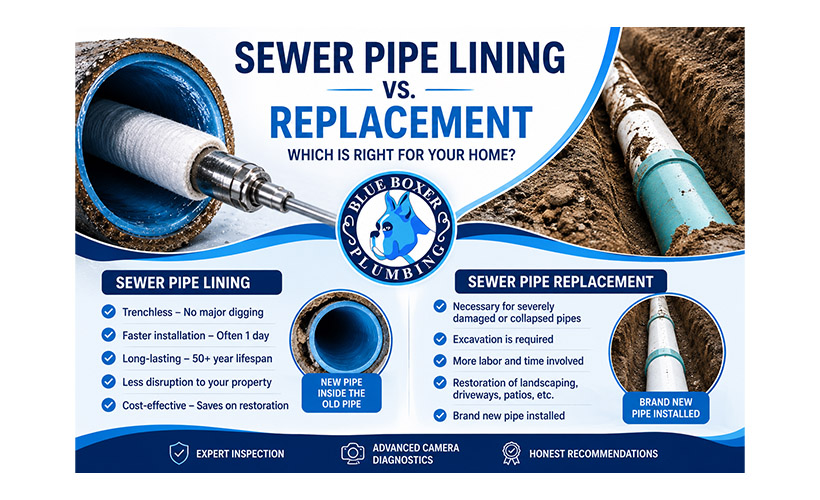
If you’ve been told your sewer line needs repair, you may be wondering whether sewer pipe lining or sewer pipe replacement is the better choice. While both methods can solve sewer line problems, they are designed for different situations. The best solution depends on the condition of your existing pipe, the extent of the damage, and your property’s layout.
In many cases, trenchless sewer pipe lining can restore a damaged sewer line without the need for major excavation. However, severely damaged or collapsed pipes may still require full replacement.
In this article, Blue Boxer Plumbing explains the differences between sewer pipe lining and traditional sewer replacement so you can better understand which option may be right for your home.
1. What is sewer pipe lining?
Sewer pipe lining is a trenchless repair method that creates a new pipe inside your existing sewer line. After the pipe is cleaned and inspected, a flexible liner saturated with epoxy resin is inserted into the damaged pipe. Once the liner cures, it forms a durable, seamless pipe that restores the sewer line without removing the original pipe.
Sewer pipe lining is commonly used to repair:
- Cracked sewer pipes
- Minor root intrusion
- Corroded cast iron pipes
- Joint separation
- Small leaks
- Aging sewer lines
Because very little digging is required, pipe lining is often referred to as a trenchless sewer repair.
2. What is traditional sewer pipe replacement?
Traditional sewer replacement involves excavating the damaged sewer line and installing an entirely new pipe. Depending on the location of the sewer line, this may require digging through landscaping, sidewalks, driveways, patios, or even concrete floors.
Replacement is often recommended when the existing pipe has suffered severe structural damage that cannot be repaired with trenchless methods.
Although replacement is more invasive, it is sometimes the only long-term solution for heavily damaged sewer systems.
3. When is sewer pipe lining the better option?
Sewer pipe lining works best when the existing pipe is still structurally stable enough to support the new liner.
Pipe lining is often recommended for:
- Minor cracks
- Corrosion
- Pinhole leaks
- Minor root intrusion
- Joint leaks
- Aging cast iron pipes
If your sewer line qualifies for trenchless repair, pipe lining can restore the system while avoiding unnecessary excavation.
4. When is sewer replacement necessary?
Not every sewer pipe can be lined. Some sewer lines are simply too damaged to support a new liner.
Replacement may be necessary if the pipe has:
- Collapsed completely
- Large missing sections
- Severe structural failure
- Major misalignment
- Significant pipe separation
- Extensive ground movement damage
In these situations, replacing the damaged sewer line provides the safest and most reliable long-term solution.
5. Which option costs less?
Many homeowners assume pipe lining is always less expensive, but the answer depends on the project.
Pipe lining generally costs more per foot than installing standard pipe. However, it often eliminates the need for:
- Landscape restoration
- Concrete replacement
- Driveway repairs
- Patio reconstruction
- Floor demolition
- Extensive excavation
When restoration costs are included, sewer pipe lining can often save homeowners thousands of dollars.
6. Which repair is faster?
In most cases, sewer pipe lining is completed much faster than traditional replacement.
Many residential lining projects can be completed in one or two days, while traditional excavation may require several days depending on the property’s layout and the amount of restoration needed.
Because trenchless repairs disturb less of your property, cleanup is also typically much faster.
7. Which option lasts longer?
Both professionally installed sewer pipe liners and new sewer pipes are designed to provide decades of service.
Modern cured-in-place pipe liners often have an expected lifespan of 50 years or more, making them a long-term solution rather than a temporary repair.
The lifespan of either repair depends on proper installation, soil conditions, pipe material, and routine maintenance.
8. How do plumbers decide which repair to recommend?
The first step is performing a sewer camera inspection. This allows plumbers to evaluate the condition of the existing pipe before recommending the best repair method.
During the inspection they evaluate:
- Pipe condition
- Structural stability
- Cracks and corrosion
- Root intrusion
- Pipe alignment
- Collapsed sections
- Overall repairability
Based on these findings, your plumber can determine whether trenchless lining or full replacement offers the best long-term value.
9. Which option is right for your home?
There is no one-size-fits-all answer. Some homeowners benefit from trenchless sewer pipe lining because it minimizes disruption and preserves their landscaping. Others require complete replacement because their sewer line has suffered extensive structural damage.
The right choice depends on:
- The condition of your sewer line
- The location of the damaged pipe
- Your property’s layout
- The severity of the damage
- Your long-term repair goals
A professional inspection is the only way to determine which repair method is appropriate.
10. Schedule a professional sewer inspection
If you’re comparing sewer pipe lining vs. replacement, Blue Boxer Plumbing can help you make an informed decision. Our experienced technicians use advanced camera inspections to evaluate your sewer line and recommend the most effective repair based on the actual condition of your plumbing—not guesswork.
Whether trenchless pipe lining or complete sewer replacement is the better option, we’ll explain your choices, provide transparent pricing, and perform quality workmanship designed to protect your home for years to come.
Contact Blue Boxer Plumbing today to schedule a sewer camera inspection and learn which repair option is right for your property.