

What Is UV-Cured Pipe Lining? Process & Benefits
August 31, 2026
Go back to "Blog"
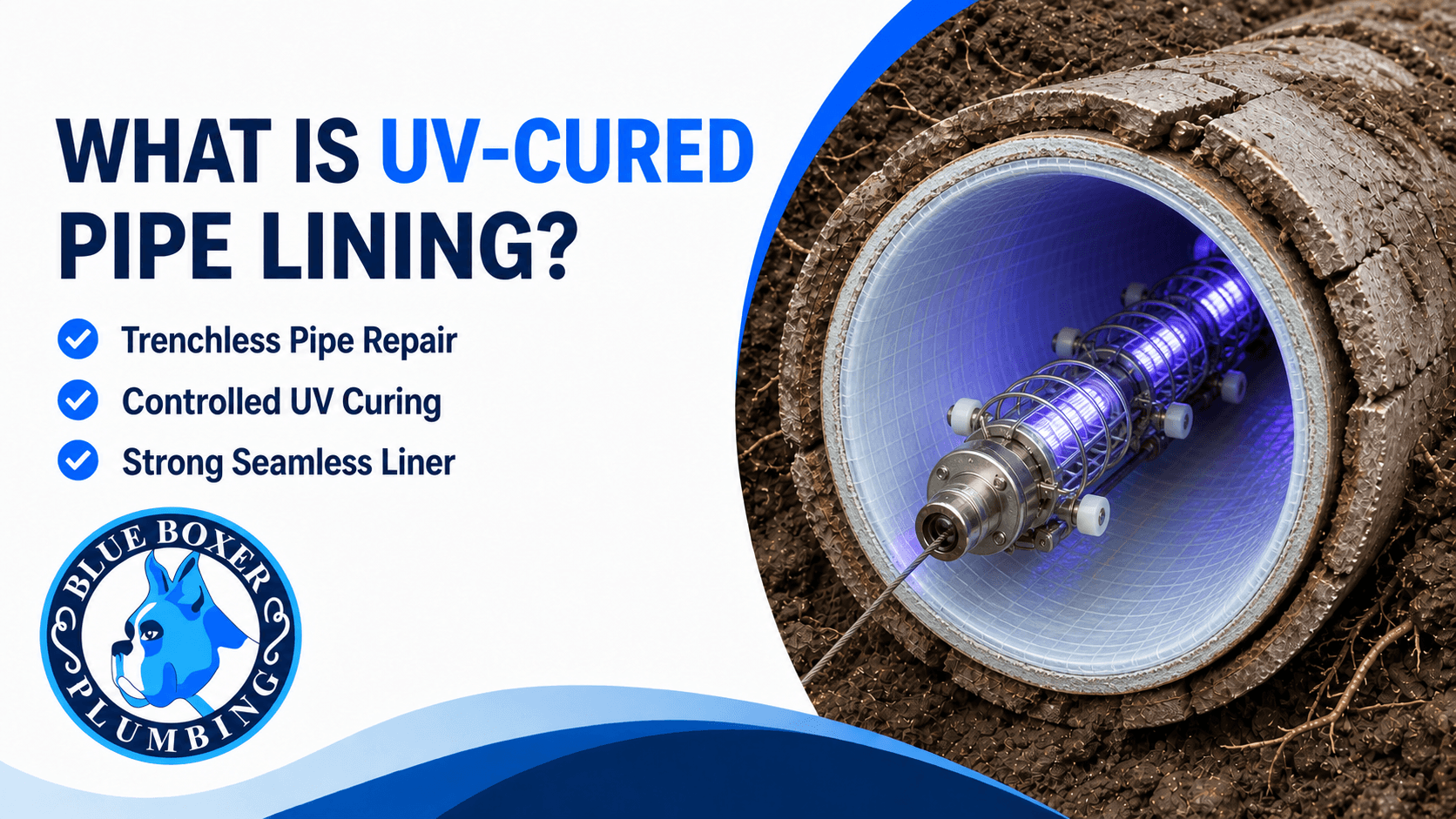
What is UV-cured pipe lining? UV-cured pipe lining is a trenchless repair method that uses ultraviolet light to harden a resin liner inside an existing sewer or drainpipe. Once cured, the liner creates a strong, continuous pipe inside the old one—often without the extensive digging required for traditional pipe replacement.
UV-cured pipe lining is a type of cured-in-place pipe lining, commonly called CIPP. The main difference is how the liner hardens. While traditional CIPP may use steam or hot water, UV CIPP uses controlled ultraviolet light to activate and cure the resin.
How Does UV-Cured Pipe Lining Work?
UV pipe lining begins with a flexible, resin-containing liner. Many UV systems use glass-fiber reinforcement to provide additional strength. The liner is pulled into the damaged pipe, inflated against the existing pipe wall, and cured using a specialized UV light assembly.
The process generally includes the following steps:
1. Camera Inspection
A plumber inspects the sewer or drain line with a camera to identify cracks, corrosion, roots, separated joints, collapsed areas, and other defects. This determines whether the pipe is suitable for lining.
2. Cleaning and Preparation
The existing pipe must be clear enough for the liner to fit tightly against its interior. Preparation may include hydro jetting, root removal, or descaling to remove grease, mineral deposits, corrosion, and debris.
3. Installing the Liner
The liner is measured for the pipe’s length and diameter, then pulled into position through an available cleanout, maintenance hole, or access point.
4. Inflating the Liner
Compressed air expands the flexible liner until it fits closely against the inside of the host pipe. The installation team monitors the pressure to maintain the correct shape.
5. Curing With UV Light
A UV light train is moved through the inflated liner at a controlled speed. The ultraviolet energy activates the resin and transforms the flexible liner into a rigid composite pipe.
Professional UV equipment can record curing details such as light output, travel speed, pressure, and temperature. This information helps confirm that the liner received the required UV exposure.
6. Final Inspection
After the liner cures, its ends are trimmed and any necessary service connections are reopened. A final camera inspection confirms that the liner is positioned properly and the pipe has a clear flow path.
What Does UV Mean in Pipe Lining?
UV stands for ultraviolet. The UV light is used only during installation to activate the resin-curing process. The light equipment is removed when the work is complete, leaving a hardened liner inside the pipe.
ASTM F2019-22 covers the pulled-in-place installation of glass-reinforced CIPP using ultraviolet-light curing.
Benefits of UV-Cured Pipe Lining
Minimal Excavation
Because the liner is installed through existing access points, UV CIPP can often avoid digging a continuous trench across lawns, driveways, patios, sidewalks, or floors.
Strong, Jointless Interior
Once cured, the liner creates a continuous interior across many of the original pipe’s joints. This can help seal locations where leaks, infiltration, or root intrusion previously occurred.
Controlled Curing
The liner does not begin curing until it receives the designed UV exposure. The installation team can manage the light intensity and travel speed according to the liner manufacturer’s requirements.
Recorded Quality-Control Data
UV equipment can document important curing information throughout the installation. These records help show that the approved curing process was followed along the pipe’s length.
Reduced Property Disruption
A trenchless installation may reduce landscaping damage, concrete demolition, restoration work, cleanup, and interruption to normal property access.
Smooth Pipe Surface
The cured liner forms a smooth interior without the rough corrosion, open joints, or heavy buildup found in many older pipes. Although the liner slightly reduces the inside diameter, its smooth surface can help maintain efficient flow.
UV-Cured CIPP vs. Heat-Cured CIPP
UV and heat-cured lining are both forms of CIPP. The primary difference is how the resin hardens.
UV-cured CIPP uses ultraviolet or LED light. It commonly uses a glass-fiber-reinforced liner that is pulled into the pipe and inflated before curing.
Heat-cured CIPP uses hot water or controlled steam. These systems often use felt or fiber-reinforced liners that may be inverted or pulled into place.
Neither method is automatically better for every project. The right option depends on the pipe’s size, length, condition, configuration, access points, bends, service connections, and structural requirements. UV, steam, and hot-water curing can all produce effective results when properly designed and installed.
What Problems Can UV Pipe Lining Repair?
Depending on the liner system and condition of the host pipe, UV CIPP may be used for:
- Cracked sewer pipes
- Leaking or separated joints
- Root-damaged connections
- Corroded pipe walls
- Small gaps and offsets
- Aging clay, concrete, cast-iron, or other compatible pipes
- Long pipe sections with multiple defects
A camera inspection is necessary to confirm that the defects are within the lining system’s capabilities.
When Is UV Pipe Lining Not Suitable?
UV lining cannot repair every pipe problem. Traditional replacement or preliminary excavation may be required when:
- The pipe has completely collapsed
- A large section is missing
- The line has severe deformation
- Major obstructions prevent liner installation
- The pipe needs to be enlarged
- The slope or alignment must be corrected
- There is no practical access point
- The liner cannot navigate the pipe’s bends
CIPP follows the existing pipe’s route and slope. It cannot lift a sunken section, eliminate a major sewer belly, or restore a completely collapsed pipe without additional repair work.
How Long Does UV-Cured Pipe Lining Last?
UV-cured pipe lining is intended to provide long-term pipe rehabilitation. Some qualifying products and project specifications use a 50-year design objective, but this is not an automatic lifespan guarantee or warranty for every installation.
Actual service life depends on the liner design, resin, wall thickness, pipe preparation, curing quality, wastewater conditions, external loads, and installer experience.
How Much Does UV-Cured Pipe Lining Cost?
UV pipe lining does not have one standard price. The final cost depends on:
- Pipe length and diameter
- Location and accessibility
- Liner material and thickness
- Cleaning and preparation
- Root removal or descaling
- Number of bends and connections
- Preliminary repairs
- Permits and final inspections
Although pipe lining requires specialized equipment, it may reduce expenses related to excavation, landscaping, concrete replacement, and property restoration. Learn more in our guide to sewer pipe lining costs.
How Do You Know Whether Your Pipe Can Be Lined?
The first step is a professional sewer camera inspection. The plumber must determine what is causing the problem, whether the pipe remains open and continuous, and whether its bends, diameter, condition, and access points are compatible with lining.
The pipe may also need to be cleaned before its true condition can be evaluated. Blue Boxer Plumbing provides camera inspections to help identify damage, roots, and obstructions, along with professional hydro jetting to remove buildup and prepare suitable pipes for further evaluation.
Frequently Asked Questions
Is UV pipe lining the same as CIPP?
UV lining is one type of CIPP. Other CIPP systems may cure through steam, hot water, ambient conditions, or LED light.
Can UV lining repair a collapsed pipe?
No. A liner needs an open, continuous path through the existing pipe. A collapsed or missing section normally must be repaired or replaced first.
Can UV lining stop tree roots?
Existing roots must be removed before lining. The continuous liner can then cover many cracks and joints through which roots previously entered.
Can UV lining fix a sewer belly?
No. A liner follows the existing slope and alignment. It cannot lift a sunken section or correct improper grading.
Is UV curing better than steam curing?
Not in every situation. Both methods can perform well when properly designed and installed. The best option depends on the pipe and project conditions.
Professional Pipe Inspection in Chesterfield, NJ
If you are experiencing recurring backups, slow drains, root intrusion, or problems with an aging underground pipe, Blue Boxer Plumbing can help identify the cause and explain your repair options.
Our technicians can inspect the line and determine whether a trenchless lining method or conventional replacement may be appropriate. Contact Blue Boxer Plumbing or call (609) 890-3333 to schedule an inspection in Chesterfield or a surrounding New Jersey community.
Final Answer: What Is UV-Cured Pipe Lining?
UV-cured pipe lining creates a new pipe inside an existing damaged pipe. A resin-containing liner is inserted, inflated against the original pipe wall, and hardened using controlled ultraviolet light.
The process can provide a strong, jointless repair with less excavation and property disruption than conventional replacement. However, it cannot correct every problem, including complete collapses, severe deformation, or improper pipe slope. A professional camera inspection is the best way to determine whether UV CIPP is suitable for your pipe.