

What Is the Sewer Pipe Lining Cost Per Foot?
October 1, 2026
Go back to "Blog"
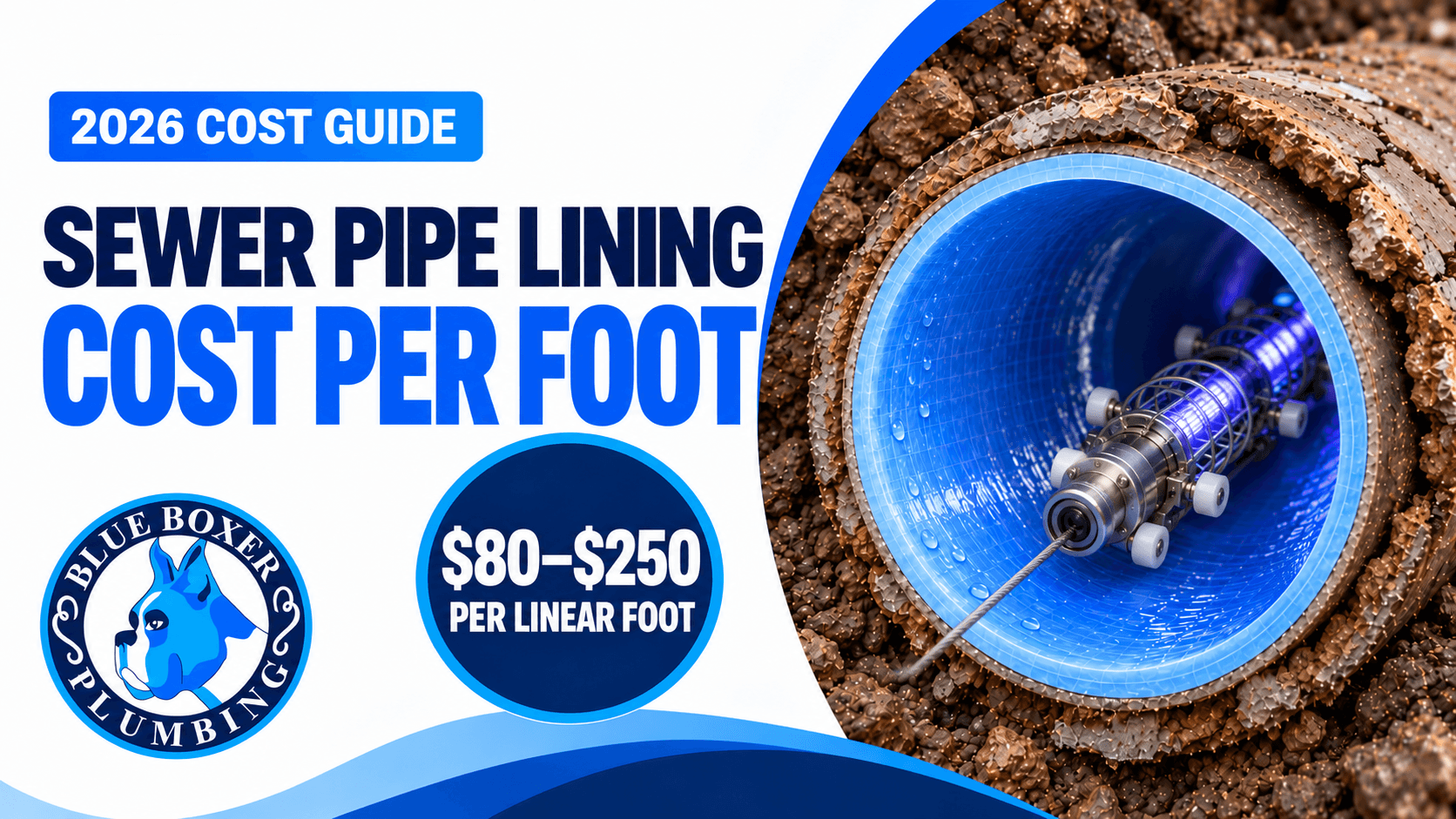
What is the sewer pipe lining cost per foot? Most residential sewer pipe lining projects fall between $80 and $250 per linear foot. However, this is a general planning range—not a guaranteed quote. The actual cost depends on the pipe’s diameter, condition, accessibility, length, and the preparation required before a liner can be installed.
For a typical residential sewer lateral, the complete project may cost several thousand dollars. Although pipe lining can carry a significant upfront price, it may reduce the need to excavate and restore lawns, driveways, patios, finished floors, and landscaping.
What Is Sewer Pipe Lining?
Sewer pipe lining, commonly called cured-in-place pipe or CIPP lining, repairs a damaged sewer from inside the existing line. A flexible tube saturated with resin is inserted into the old pipe, expanded against its walls, and cured until it becomes rigid.
The result is a smooth, continuous pipe within the original pipe. Because the old line usually remains in place, CIPP can often be installed with substantially less excavation than conventional sewer replacement.
Pipe lining may be considered for problems such as:
- Cracks and small fractures
- Leaking or deteriorated pipe joints
- Tree root intrusion
- Corroded cast-iron pipes
- Aging clay or concrete sewer lines
- Minor holes and missing pipe material
- Water entering or escaping through damaged areas
How Much Does Sewer Pipe Lining Cost Per Foot?
A typical national planning range for residential CIPP lining is approximately $80 to $250 per linear foot. Larger pipes, difficult access, extensive cleaning, multiple connections, or complex configurations may push the price higher.
Using that general range, approximate lining costs could look like this:
- 20 feet: Approximately $1,600 to $5,000 before minimum project charges or additional work
- 40 feet: Approximately $3,200 to $10,000
- 60 feet: Approximately $4,800 to $15,000
- 100 feet: Approximately $8,000 to $25,000
These examples are estimates only. A short repair may cost more than the simple per-foot calculation suggests because the contractor must still transport equipment, inspect and clean the pipe, prepare the liner, complete the curing process, and perform a final inspection.
What Is Usually Included in the Price?
When comparing estimates, homeowners should look beyond the advertised price per foot. A complete pipe-lining proposal may include:
- An initial sewer camera inspection
- Measurement of the pipe’s length and diameter
- Cleaning, descaling, or hydro jetting
- Removal of roots and other obstructions
- The liner and resin system
- Liner installation and inflation
- Steam, hot-water, ambient, or light curing
- Reopening necessary branch connections
- A final camera inspection
- Cleanup and disposal of removed debris
Some estimates may not include permits, major root removal, excavation to create an access point, repairs to collapsed sections, or restoration of disturbed surfaces. Ask for a written estimate that clearly explains what is and is not included.
What Affects Sewer Pipe Lining Cost?
Length of the repair
A longer liner requires more material, resin, labor, and curing time. However, longer projects sometimes have a lower effective cost per foot because equipment and setup expenses are distributed across more footage.
Pipe diameter
Larger pipes require wider liners and more resin. They may also need thicker or specially engineered materials, increasing the project cost.
Condition of the existing pipe
The host pipe must be properly prepared before lining. Heavy corrosion, hardened scale, roots, grease, or debris can require significant cleaning. If part of the pipe has collapsed, that area may need to be excavated or repaired before lining can continue.
Access to the sewer line
Easy access through an existing cleanout may simplify the installation. If no usable access point exists, limited excavation or installation of a new cleanout may be necessary.
Bends and branch connections
A straight sewer line is generally easier to line than one containing multiple bends, diameter changes, or connections. Branch lines may need to be reopened after the liner has cured.
Liner and curing system
CIPP systems may use felt, fiberglass, or hybrid liners with different resin formulations. Curing may involve hot water, steam, ultraviolet light, LED light, or ambient conditions. The selected system and required equipment can affect the price.
Permits and local requirements
Municipal permit fees, inspections, traffic control, and local sewer-authority requirements may add to the total. These costs differ by location and project type.
Why Can a Short Pipe-Lining Project Cost More Per Foot?
Pipe lining involves fixed setup expenses that apply whether the liner is 15 feet or 100 feet long. A contractor still needs to inspect and clean the pipe, transport specialized equipment, prepare the resin, install the liner, cure it, and verify the final result.
Because those expenses are spread across fewer feet, a small sectional repair may have a higher per-foot price even though its total cost is lower. For this reason, multiplying an online per-foot estimate by a short distance may not accurately predict the final proposal.
Does Pipe Lining Cost Less Than Sewer Replacement?
The answer depends on the location and condition of the pipe. Open-trench replacement can sometimes have a competitive pipe-installation price, especially when the sewer is shallow and located beneath an open lawn.
However, excavation may create additional expenses when the sewer runs beneath:
- A driveway or parking area
- A patio, porch, or walkway
- Mature landscaping
- A finished basement floor
- A building addition
- Fencing, irrigation, or utility lines
Removing and restoring these surfaces can make the total cost of conventional replacement much higher. CIPP can be valuable when limiting property disruption and restoration work is a priority.
Is Every Sewer Pipe a Candidate for Lining?
No. CIPP works best when the existing sewer still has a usable pathway and enough of its original shape to receive the liner.
Another repair method may be necessary when the pipe has:
- Fully collapsed
- Severely shifted or offset joints
- A major belly holding wastewater
- Incorrect slope or alignment
- Extensive deformation
- Large missing sections that cannot support installation
Because a liner follows the route of the existing pipe, it cannot normally correct a major slope or alignment problem. A sewer camera inspection is necessary to determine whether lining is technically appropriate.
Is Sewer Pipe Lining Worth the Cost?
For a suitable sewer line, CIPP can offer strong long-term value. The cured liner creates a continuous interior that seals many cracks and deteriorated joints while reducing opportunities for future root entry.
Its primary benefits can include:
- Less excavation and property disruption
- Reduced surface-restoration expenses
- A seamless interior without numerous pipe joints
- Faster installation in many situations
- Improved flow through a smoother pipe interior
- A long service life when properly designed and installed
Whether it is worth the investment depends on the pipe’s condition, the cost of other repair options, and what would need to be removed and restored during excavation.
Questions to Ask About a Pipe-Lining Estimate
Before selecting a contractor, ask:
- Is the camera inspection included?
- What cleaning and preparation will be performed?
- Which liner and resin system will be used?
- How will the liner be cured?
- Are permits and inspections included?
- Will branch connections need to be reopened?
- Is excavation or surface restoration expected?
- Will I receive a final inspection video?
- What warranty applies to the materials and workmanship?
Comparing the complete scope of work is more useful than choosing a contractor based only on the lowest advertised price per foot.
Frequently Asked Questions
What is the average sewer pipe lining cost per foot?
A common planning range is approximately $80 to $250 per linear foot. Your actual price may be outside that range depending on local labor rates, access, pipe diameter, cleaning requirements, liner design, and project length.
Does the price include sewer cleaning?
It may, but homeowners should confirm this in writing. Heavy descaling, root removal, or specialized cleaning may be listed as a separate charge.
How long does a lined sewer pipe last?
A properly designed, installed, and tested CIPP liner can provide decades of service. Its expected lifespan depends on the liner system, installation quality, operating conditions, and condition of the surrounding pipe and soil.
Can CIPP repair a collapsed sewer?
A liner generally cannot be installed through a fully collapsed section. Excavation, pipe bursting, or conventional replacement may be needed to restore a usable pathway.
How can I get an accurate price?
The most reliable starting point is a sewer camera inspection. It allows the plumber to evaluate the pipe’s condition, measure the repair area, identify access challenges, and determine whether lining is suitable.
Request a Sewer Pipe-Lining Estimate
While sewer pipe lining commonly costs between $80 and $250 per linear foot, every project must be evaluated individually. An online estimate cannot account for the condition, accessibility, diameter, and configuration of your sewer line.
Blue Boxer Plumbing can inspect your sewer system and explain whether CIPP lining, sectional repair, or conventional replacement is the most appropriate option. Learn more about our sewer and water main services, or call (609) 890-3333 to request an inspection and customized estimate.