

Does Plumbing Use Electricity?
October 30, 2026
Go back to "Blog"
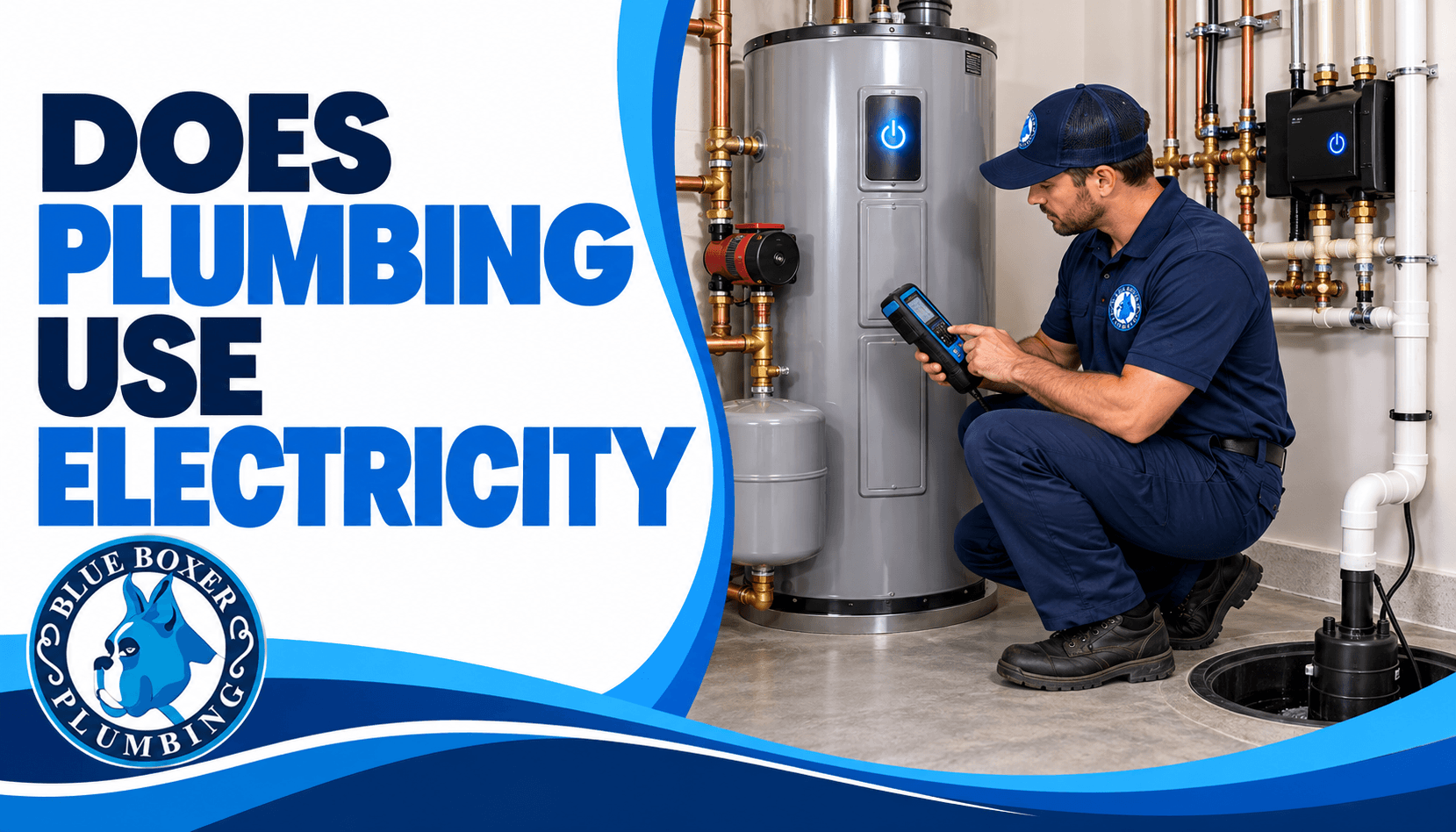
Does plumbing use electricity? Basic water-supply pipes and gravity drains do not normally need electricity to move water through a home. However, many modern plumbing appliances, pumps, controls, and safety devices rely on electrical power.
Whether your plumbing continues working during an outage depends on your water source and the equipment installed in your home.
How Plumbing Works Without Electricity
In many homes connected to a municipal water system, water reaches the property under pressure supplied by the utility. Once the water enters the house, the plumbing distributes it to faucets, toilets, showers, and appliances without requiring a separate electric pump.
Most drain and sewer lines also rely on gravity. Wastewater flows downward through sloped pipes and toward the municipal sewer or septic system.
This means some plumbing fixtures may continue working during a power outage. However, electrically powered equipment connected to the system may stop operating.
Which Plumbing Systems Use Electricity?
Electric water heaters
Electric water heaters use heating elements to warm the water stored in the tank. During an outage, the water already inside the tank may remain warm temporarily, but the heater cannot produce additional hot water until power returns.
Tankless water heaters
Electric tankless water heaters require electricity to heat water. Many gas-fired tankless models also need electrical power for their ignition, controls, sensors, and ventilation system. A gas supply alone does not guarantee that a modern tankless unit will operate during an outage.
Private well pumps
Homes with private wells normally depend on an electric pump to bring water into the house. A pressure tank may provide a limited amount of water after the power goes out, but the pump cannot refill it without electricity or a compatible backup-power system.
Sump pumps
A sump pump removes groundwater from a basement or crawl space. Standard sump pumps stop during a power outage unless they have a working battery backup or another approved backup system. This can be especially important when an outage occurs during heavy rain.
Sewage ejector and grinder pumps
Fixtures located below the main sewer line may need an ejector or grinder pump to move wastewater upward. Toilets, sinks, showers, or laundry equipment connected to that pump should be used carefully during an outage because the holding basin could fill when the pump is not operating.
Hot-water recirculation pumps
A recirculation pump moves hot water through the plumbing so it reaches fixtures faster. Without electricity, the pump stops circulating water. The home may still have hot water, but it can take longer to arrive at the faucet.
Boilers and circulator pumps
Even when a boiler burns natural gas or oil, its controls, ignition system, and circulation pumps may depend on electricity. The heating system may therefore stop working during an electrical outage.
Garbage disposals
A garbage disposal uses an electric motor. It will not operate without power, although the connected sink drain may still work if it is not clogged.
Smart leak detectors and shutoff valves
Some leak-detection systems use electricity, batteries, or both. Models with backup batteries may continue monitoring temporarily, while others can lose connected features or automatic shutoff functions during an outage.
Will the Toilet Work When the Power Is Out?
A standard gravity-fed toilet usually works during a power outage as long as the home still has running water. The tank fills from the pressurized water supply and releases that stored water when flushed.
The situation may be different if the home uses a private well, a pressure-assisted fixture that requires electricity, or a sewage ejector pump. If the water supply has stopped, a standard toilet may sometimes be flushed by carefully adding water to the bowl, provided the drainage system is still functioning.
Do Faucets and Showers Work During an Outage?
Homes receiving uninterrupted municipal water will often still have cold running water. Hot water availability depends on the type of water heater and how much heated water remains.
A home supplied by a private well may lose water pressure after the pressure tank is depleted. Local utility conditions can also affect municipal service, so homeowners should follow any outage or water-quality notices issued in their area.
Do Drains Work Without Electricity?
Gravity-based drains can generally continue working because they do not use electricity. However, avoid using fixtures that drain into a sewage ejector or grinder-pump system when the pump has no power.
A power outage also does not correct a clogged or damaged drain. If wastewater begins backing up, stop using the affected fixtures and contact a plumber.
Plumbing and Electrical Safety
Water and electricity can create a serious safety hazard. Do not touch plugs, wiring, controls, pumps, water heaters, or electrical panels while standing in water or when the equipment is wet.
If a plumbing leak reaches electrical equipment:
- Keep people and pets away from the area
- Do not enter standing water near electrical equipment
- Do not attempt to unplug wet equipment
- Contact the appropriate emergency service if there is immediate danger
- Have qualified plumbing and electrical professionals inspect the affected systems
A plumber can repair the water source and plumbing appliance, while electrical wiring, circuits, or service-panel work may need to be completed by a licensed electrician.
How to Prepare Your Plumbing for a Power Outage
- Identify whether your water comes from a municipal supply or private well
- Learn which fixtures connect to sewage or grinder pumps
- Test sump-pump battery backups according to the manufacturer’s instructions
- Keep smart leak-detector batteries charged or replaced
- Know where the main water shutoff valve is located
- Follow the manufacturer’s requirements before connecting plumbing equipment to a generator
Frequently Asked Questions
Does a gas water heater need electricity?
Some do and some do not. Many modern gas tankless and power-vented water heaters require electricity for ignition, controls, and ventilation. Certain older or simpler storage models may operate without household electricity. Check the manufacturer’s instructions for your specific unit.
Does a water heater use a lot of electricity?
Electricity use depends on the heater type, tank size, efficiency, water temperature, and household demand. Heat-pump water heaters generally use electricity more efficiently than conventional electric-resistance models.
Can a plumber work on electrical wiring?
A plumber may connect and service plumbing equipment within the limits of applicable licensing rules. New circuits, electrical-panel work, or repairs to household wiring should be handled by a properly licensed electrician.
Can I run a sump pump with a generator?
Possibly, but the generator and connection must be appropriately sized and safely installed. Never operate a portable generator inside a home, garage, basement, or enclosed area. Follow the equipment manufacturer’s instructions and professional electrical guidance.
Need Help With an Electrically Powered Plumbing System?
Plumbing does not always use electricity, but water heaters, pumps, boilers, disposals, and control systems often do. Identifying which equipment depends on power can help you prepare for outages and recognize when professional service is needed.
Explore Blue Boxer Plumbing’s residential plumbing services, or call (609) 890-3333 to schedule service.