

What Does CIPP Stand For? A Homeowner’s Guide
October 1, 2026
Go back to "Blog"
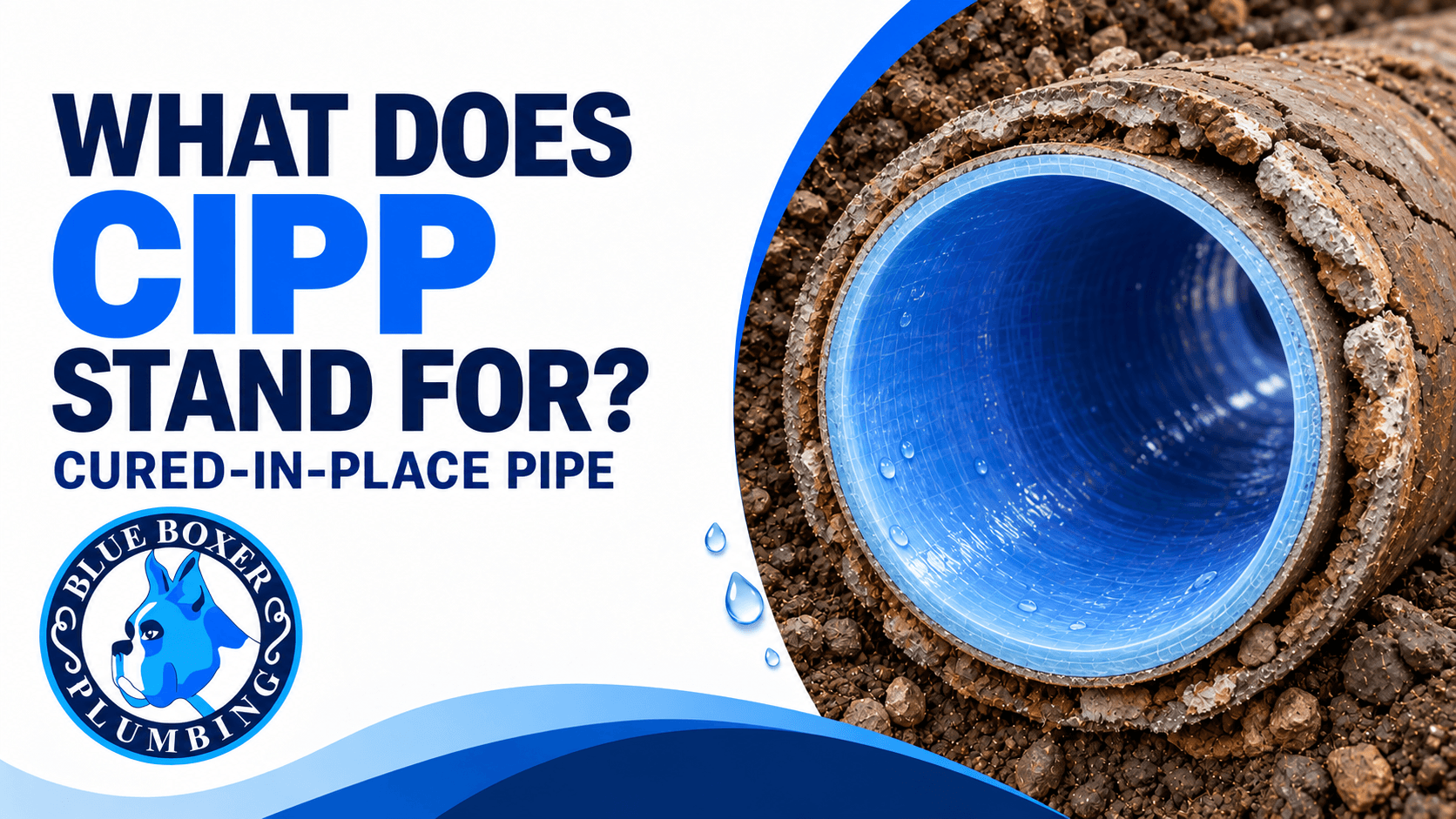
What does CIPP stand for? CIPP stands for cured-in-place pipe. It is a trenchless pipe rehabilitation method that creates a new, seamless liner inside an existing damaged pipe.
Instead of excavating the entire sewer line, a plumbing professional inserts a resin-saturated liner into the old pipe and cures it in position. Once hardened, the liner forms a durable pipe within the original pipe. This can repair many cracks, leaks, deteriorated sections, and root-related problems while limiting damage to yards, driveways, floors, and landscaping.
What Does Each Part of CIPP Mean?
Understanding the abbreviation makes the process easier to visualize.
Cured
The flexible liner contains a specially selected resin. After the liner is positioned against the inside of the existing pipe, the resin is hardened—or cured—using an approved method such as hot water, steam, ultraviolet light, LED light, or ambient curing.
In Place
The liner hardens while it is already positioned inside the damaged pipe. It does not arrive as a rigid replacement pipe that must be placed in a fully excavated trench.
Pipe
After curing, the liner becomes a strong, continuous pipe within the existing host pipe. It is more than a temporary patch or thin surface coating. A properly designed liner can restore structural integrity and create a smoother, sealed pathway for wastewater.
How Does CIPP Pipe Lining Work?
Although every property and sewer system is different, a typical CIPP project follows several important steps.
1. Sewer camera inspection
A plumbing professional first examines the sewer line with a camera. This inspection helps locate cracks, root intrusion, corrosion, failed joints, buildup, and collapsed areas. It also determines the pipe’s length, diameter, configuration, and overall condition.
2. Pipe cleaning and preparation
The original pipe must be thoroughly cleaned before lining. Depending on its condition, preparation may involve hydro jetting, root removal, descaling, or mechanical cleaning. A clean interior allows the liner to expand correctly and fit closely against the host pipe.
3. Liner installation
A flexible tube saturated with resin is measured for the section being repaired. The liner is then pulled or inverted into the existing pipe through an available access point.
4. Inflation and curing
Air or water pressure expands the liner until it fits against the inside walls of the old pipe. The resin is then cured using the method selected for the liner system. Once curing is complete, the flexible material becomes a rigid new pipe.
5. Final inspection
After the equipment is removed, another camera inspection verifies the liner’s placement and condition. Any necessary branch connections are reopened, and the sewer line is returned to service.
What Problems Can CIPP Repair?
CIPP may be used to rehabilitate sewer and drain lines affected by:
- Cracks and fractures
- Leaking or separated joints
- Tree root intrusion through pipe joints
- Corrosion and interior deterioration
- Small holes or missing pipe material
- Recurring infiltration through damaged areas
- Aging clay, cast iron, concrete, or other pipe materials
The liner creates a continuous interior with fewer places for roots to enter or wastewater to escape. Its smoother surface may also improve flow compared with a heavily scaled or deteriorated pipe.
What Are the Benefits of CIPP?
For a suitable pipe, CIPP can offer several advantages over conventional excavation.
- Less digging: Installation often uses existing cleanouts or limited access points.
- Reduced property damage: Less excavation can help preserve landscaping, driveways, walkways, finished floors, and other improvements.
- Faster installation: Many lining projects require less time than digging up and replacing the same section.
- Seamless construction: The cured liner forms a continuous pipe without the numerous joints found in some traditional systems.
- Long-term performance: A properly designed, installed, and tested CIPP liner can provide decades of service.
- Versatile applications: CIPP can be adapted to different pipe materials, diameters, lengths, and configurations.
CIPP still requires professional preparation and installation. The quality of the inspection, cleaning, liner design, curing, and final verification can all affect the finished result.
Is CIPP the Same as Trenchless Pipe Lining?
CIPP is one of the most widely used forms of trenchless pipe lining. However, “trenchless repair” is a broader category that also includes methods such as pipe bursting, sliplining, and sectional repairs.
CIPP rehabilitates the pipe from the inside. Pipe bursting, by comparison, breaks apart the old pipe while pulling a new pipe through the same path. The appropriate method depends on the type of damage, access, pipe size, surrounding utilities, and goals of the project.
How Is a CIPP Liner Cured?
Several curing methods can be used, depending on the liner and resin system:
- Hot-water curing: Heated water circulates through the liner to harden the resin.
- Steam curing: Controlled steam provides the heat needed for curing.
- UV or LED curing: A light unit travels through a light-sensitive liner, hardening the resin as it moves.
- Ambient curing: Some resin systems cure without an external heat or light source.
These are different ways of completing the same basic CIPP process. The contractor selects a compatible liner, resin, and curing method for the specific application.
Can Every Damaged Pipe Be Lined?
No. CIPP is highly useful, but it is not appropriate for every sewer problem. The existing pipe usually needs to maintain a usable pathway so the liner can be installed and formed correctly.
Traditional replacement or another repair method may be necessary when a pipe is fully collapsed, severely offset, badly deformed, improperly pitched, or affected by a significant belly. Lining follows the existing route, so it generally cannot correct major alignment or slope problems.
This is why a sewer camera inspection is essential. The inspection allows a plumber to determine whether lining is practical or whether replacement would provide a more dependable solution.
CIPP vs. Traditional Pipe Replacement
Traditional replacement involves excavating the damaged pipe, removing it, and installing a new line. It may be the best choice when a sewer has collapsed or needs its alignment corrected. However, excavation can also require removing and restoring soil, concrete, pavement, landscaping, or finished surfaces.
CIPP takes a different approach by using the remaining pipe as a host for the new liner. When the original line is a good candidate, this can reduce surface disruption and avoid much of the restoration associated with open-trench replacement.
The right choice should be based on the pipe’s actual condition—not simply on which method sounds more convenient. A professional inspection can reveal whether lining or replacement offers the better long-term value.
Frequently Asked Questions About CIPP
Is CIPP a permanent repair?
CIPP is designed as a long-term pipe rehabilitation solution rather than a temporary patch. Its expected service life depends on the liner design, materials, installation quality, pipe conditions, and application.
Does CIPP reduce the pipe’s inside diameter?
The liner slightly reduces the interior diameter because it is installed inside the original pipe. However, its smooth, jointless surface can support efficient flow and may perform better than the rough interior of a corroded or heavily scaled line.
Can roots grow through a CIPP liner?
A continuous liner eliminates many of the open joints and cracks through which roots commonly enter. Existing roots must still be removed, and the pipe must be properly prepared before installation.
How long does CIPP installation take?
The schedule depends on pipe length, access, cleaning requirements, curing method, and the extent of the damage. Many residential projects can be completed more quickly than full excavation, but an inspection is needed to provide an accurate timeline.
Is CIPP only used for sewer mains?
No. CIPP technology can be used for municipal mains, residential sewer laterals, commercial plumbing systems, and certain pressure-pipe applications. The materials and installation requirements vary by application.
Find Out Whether CIPP Is Right for Your Pipe
In simple terms, CIPP means cured-in-place pipe: a resin liner installed and hardened inside an existing line to create a new pipe within the old one. It can provide an effective, minimally invasive solution when a damaged pipe remains suitable for lining.
If you are experiencing recurring backups, root intrusion, sewer odors, slow drains, or concerns about an aging sewer line, Blue Boxer Plumbing can inspect the system and explain your repair options. Learn more about our sewer and water main services, or call (609) 890-3333 to schedule service.