

What Is Cured-in-Place Pipe Lining? How CIPP Works
August 17, 2026
Go back to "Blog"
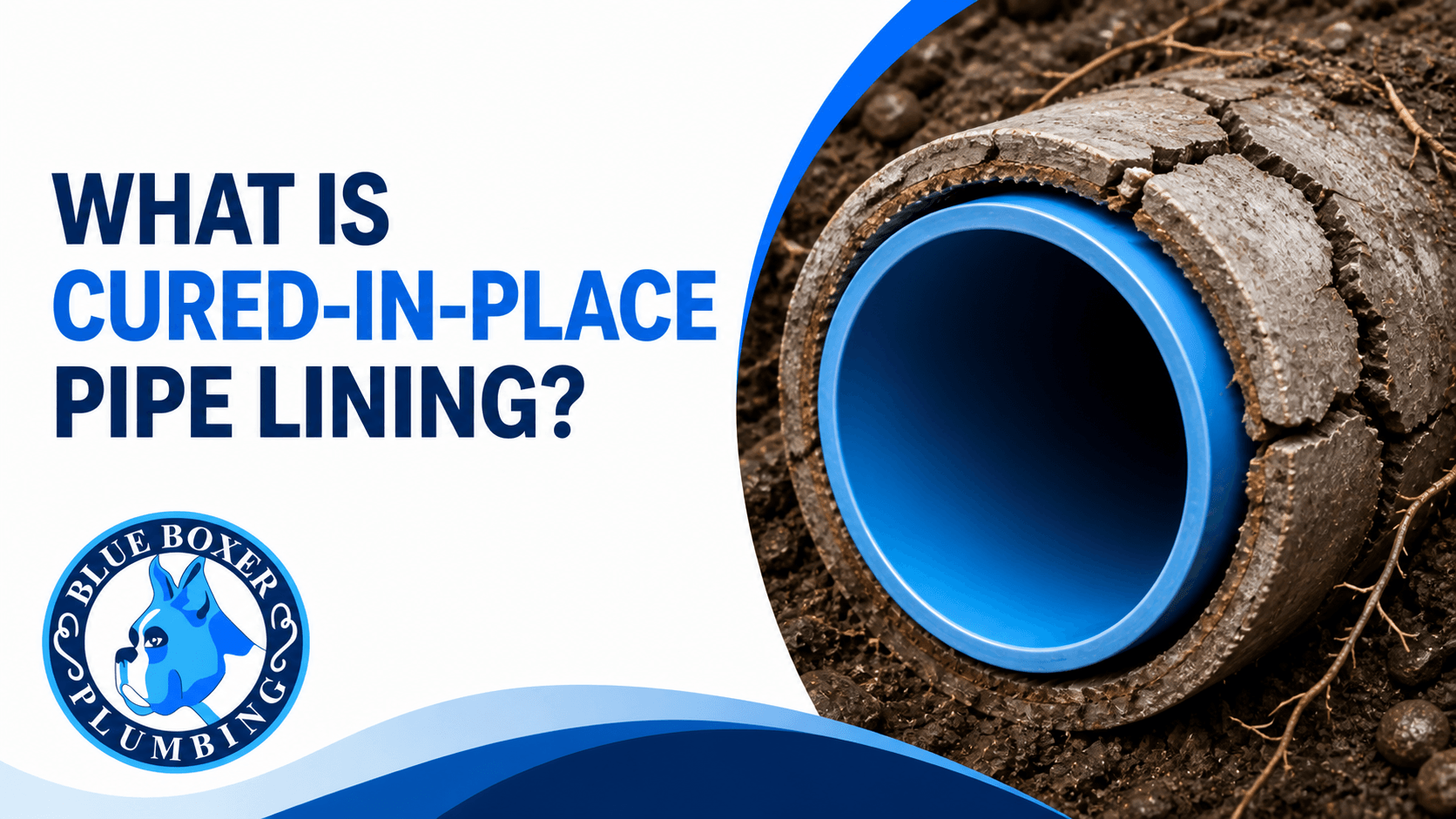
Cured-in-place pipe lining, commonly called CIPP lining, is a trenchless method used to repair a damaged sewer or drain line from the inside. Instead of excavating and removing the entire old pipe, a plumber inserts a flexible, resin-saturated liner into it. The liner is expanded against the pipe walls and cured until it becomes a solid, seamless pipe within the original one.
For qualifying pipes, CIPP can seal cracks, reinforce deteriorated sections, stop leaks, and help prevent future root intrusion—all while avoiding the extensive digging associated with traditional sewer replacement.
However, pipe lining is not suitable for every damaged sewer. A camera inspection is needed to determine whether the existing pipe can be properly cleaned, accessed, and lined.
What Does CIPP Stand For?
CIPP stands for cured-in-place pipe.
Each part of the name describes the process:
- Cured: The resin is hardened using the appropriate curing method.
- In place: The liner hardens inside the existing sewer or drain line.
- Pipe: Once cured, the liner forms a continuous new pipe inside the old one.
You may also hear the process described as sewer pipe lining, trenchless pipe lining, epoxy pipe lining, no-dig pipe repair, or pipe relining. Although these terms are sometimes used interchangeably, CIPP refers specifically to installing and curing a resin-saturated tube inside an existing pipe.
How Does Cured-in-Place Pipe Lining Work?
Successful CIPP installation involves considerably more than simply pushing a liner into a drain. The existing pipe must first be evaluated and carefully prepared.
While equipment and curing methods vary, most residential CIPP projects follow these steps.
1. The Sewer Line Is Inspected
A plumber passes a video camera through the pipe to locate cracks, corrosion, root intrusion, separated joints, standing water, and collapsed sections.
This inspection answers the most important question: Is the pipe a suitable candidate for lining?
It also helps the plumber measure the repair area, identify connections, and determine how the liner can be installed.
2. Roots, Scale, and Buildup Are Removed
The liner needs a clean, open pathway. Roots, grease, mineral deposits, rust, and loose pipe material must therefore be removed before installation.
Depending on the condition of the line, preparation may involve professional hydro jetting, mechanical descaling, or specialized cutting equipment. The pipe is then inspected again to confirm that it is ready to receive the liner.
Proper preparation is critical. Lining a poorly cleaned or incorrectly measured pipe can produce wrinkles, restrictions, or other installation problems.
3. A Liner Is Prepared With Resin
A flexible liner—often made from felt, fiberglass, or another engineered material—is saturated with a thermosetting resin. The liner and resin system are selected according to the pipe’s diameter, length, condition, and intended use.
Once mixed and saturated, the liner must be installed within a controlled working period.
4. The Liner Is Inserted Into the Old Pipe
The prepared liner is either pulled into position or inverted into the pipe using air or water pressure. An inflatable bladder or installation pressure holds it tightly against the interior walls of the existing pipe.
The liner conforms to the pipe’s shape, covering cracks, deteriorated surfaces, and leaking joints along the lined section.
5. The Resin Is Cured
Once the liner is properly positioned, the resin is hardened. Depending on the installation system, curing may use ambient conditions, hot water, steam, or ultraviolet light.
After curing, the flexible material becomes a rigid, jointless pipe inside the host pipe.
6. Connections Are Reopened and Inspected
If the liner passes across branch connections, those openings may need to be restored using specialized cutting equipment.
The plumber then completes a final camera inspection to verify that the liner is properly formed, the connections are open, and wastewater can move through the repaired line.
What Problems Can CIPP Lining Repair?
Cured-in-place pipe lining is commonly considered for sewer and drain lines affected by:
- Cracks and fractures
- Small leaks
- Deteriorated pipe walls
- Corrosion and scaling
- Leaking or separated joints
- Pinhole damage
- Minor root intrusion
- Aging cast-iron or clay sewer lines
Roots and other obstructions must be removed before the liner is installed. The finished liner then covers the cracks and joints through which roots may have entered along the repaired section.
CIPP may be used in cast iron, clay, concrete, PVC, and certain other pipe materials, but compatibility depends on the pipe’s condition and the lining system being used. Pipe material alone does not determine whether lining is possible.
When Can a Pipe Not Be Lined?
CIPP is highly useful, but it cannot correct every type of sewer failure. Excavation, pipe bursting, or conventional replacement may be necessary when a line has:
- Completely collapsed
- Lost large sections of its structure
- Severe joint displacement or misalignment
- A major obstruction that cannot be removed
- Insufficient access for installation
- An interior that cannot be adequately cleaned
- Too little remaining diameter to accept a liner
A liner also follows the route and general shape of the existing pipe. This means it normally cannot correct a serious belly, improper slope, or grade problem that causes wastewater to collect. Those conditions may require excavation and physical realignment of the sewer line.
This is why a professional should diagnose the pipe before recommending a repair. The least disruptive option is only valuable when it also solves the underlying problem.
What Are the Benefits of Cured-in-Place Pipe Lining?
Less Excavation
CIPP is installed through existing or strategically created access points. Although some projects require limited digging, lining can often avoid an open trench along the entire sewer route.
That can help preserve lawns, mature landscaping, driveways, sidewalks, patios, finished floors, and other improvements above the pipe.
Faster Installation
Many residential lining projects can be completed much faster than full excavation and replacement. The exact schedule depends on cleaning requirements, pipe length, access, curing time, and the complexity of the sewer system.
A Seamless Interior
The cured liner creates a continuous interior without the series of joints found in some conventional piping systems. This eliminates many of the openings through which water and roots can enter along the lined section.
Resistance to Corrosion
CIPP materials do not rust like metal sewer pipes. This makes lining particularly useful when an aging cast-iron pipe has extensive internal corrosion but remains a viable candidate for rehabilitation.
Reduced Restoration Work
Traditional replacement may involve more than the plumbing repair itself. Concrete, flooring, landscaping, or pavement may also need to be restored after excavation.
By reducing surface disruption, CIPP can reduce those secondary costs and shorten the time needed to return the property to normal.
Does CIPP Make the Pipe Smaller?
Yes, a liner slightly reduces the pipe’s internal diameter because it occupies space inside the existing line.
However, the new interior is typically smooth and free from the heavy corrosion, scale, and irregular joints that may have restricted the old pipe. As a result, the small reduction in diameter does not automatically mean poorer performance.
The final result depends on correct liner sizing, installation quality, the condition of the original line, and whether the sewer has an adequate slope. These factors should be assessed during the inspection and design process.
How Long Does Cured-in-Place Pipe Lining Last?
A professionally designed and installed CIPP liner is intended to provide decades of service. You will often see expected service-life figures of 50 years or more, but no contractor should treat one number as a guarantee for every property.
Actual longevity can be affected by:
- The liner and resin system
- Condition of the original pipe
- Quality of cleaning and preparation
- Installation and curing control
- Pipe usage and wastewater conditions
- Soil movement and external structural forces
- Ongoing drain maintenance
Homeowners should ask what product will be installed, how the liner will be cured, what inspections are included, and what warranty applies to the work.
How Long Does CIPP Installation Take?
Many residential CIPP repairs can be completed in one or two days. A straightforward installation may take less time, while a pipe requiring extensive root removal, descaling, access work, or multiple liners may take longer.
The property’s plumbing may be temporarily unavailable during part of the process. Your plumber should explain the expected schedule and when fixtures can safely be used again.
Is CIPP the Same as Pipe Replacement?
No. CIPP rehabilitates an existing pipe by constructing a new liner inside it. Traditional replacement removes the damaged pipe and installs a different pipe in its place.
Lining is often the more practical choice when the old pipe retains a usable pathway and excavation would damage valuable surfaces. Replacement is usually more appropriate when the sewer has collapsed, moved out of alignment, or cannot support a successful lining installation.
Neither method is automatically better. The correct choice depends on what the camera inspection reveals, the location of the line, and the total cost—including any restoration required after excavation. Learn more in our guide to sewer pipe lining versus replacement.
How Much Does Cured-in-Place Pipe Lining Cost?
CIPP does not have one standard price. The cost depends on factors such as:
- Length and diameter of the pipe
- Amount of cleaning or descaling required
- Severity of the deterioration
- Number of bends and connections
- Available access points
- Liner and curing system
- Local permit or inspection requirements
Lining can have a higher repair cost per foot than conventional pipe materials, but that comparison does not tell the whole story. A complete estimate should also account for excavation, concrete removal, landscaping, and surface restoration.
For more detailed pricing information, read our guides to cured-in-place pipe lining costs and sewer pipe lining cost per foot.
A sewer camera inspection is the best way to obtain meaningful options and pricing for a specific property.
Is Cured-in-Place Pipe Lining Worth It?
CIPP can be an excellent long-term investment when the pipe is a suitable candidate and the installation avoids expensive demolition or excavation.
It may be particularly valuable when a sewer runs beneath:
- A driveway or sidewalk
- Finished basement flooring
- A patio, porch, or addition
- Established landscaping
- Areas with difficult equipment access
The decision should still be based on evidence. Ask to see the inspection findings and understand why lining, replacement, or another repair method is being recommended.
Frequently Asked Questions
Is Cured-in-Place Pipe Lining a Permanent Repair?
CIPP is intended as a long-term pipe rehabilitation method, not a temporary patch. Its performance depends on proper design, preparation, installation, and curing.
Can CIPP Repair a Collapsed Sewer Pipe?
Usually not. A liner needs an open, continuous route through the existing pipe. A fully collapsed line or severe misalignment generally requires another repair method.
Can Tree Roots Grow Through a CIPP Liner?
A properly installed liner creates a continuous barrier across cracks and joints in the lined section. However, roots must be removed before installation, and unlined connections or sections may remain vulnerable.
Does CIPP Work on Cast-Iron Sewer Pipes?
It often can. CIPP is commonly considered for corroded cast-iron drains, provided the pipe can be cleaned and has a suitable pathway for the liner. Severe structural loss, poor slope, or a collapse may make replacement necessary.
Can Only One Damaged Section Be Lined?
In some cases, a plumber can install a sectional or point-repair liner instead of lining the entire pipe. The location, length, and nature of the damage determine whether a localized repair is appropriate.
Is Cured-in-Place Pipe Lining Completely Dig-Free?
Not always. Existing cleanouts or access points can frequently be used, but limited excavation may be needed to create access or reach a badly damaged section. “Trenchless” generally means substantially less digging, not a guarantee of zero digging.
Find Out Whether Your Sewer Line Can Be Lined
Cured-in-place pipe lining can restore a qualifying sewer line with far less disruption than traditional excavation. But the quality of the result starts with an accurate diagnosis—not an assumption that every damaged pipe should be lined.
Blue Boxer Plumbing uses sewer camera inspections to identify the condition and location of pipe damage before recommending a repair. We’ll explain what the camera reveals, whether CIPP is appropriate, and how lining compares with other available solutions.
If you are dealing with recurring backups, root intrusion, a leaking sewer, or an aging cast-iron drain in Chesterfield Township or the surrounding New Jersey area, contact Blue Boxer Plumbing or call (609) 890-3333 to schedule an inspection.